
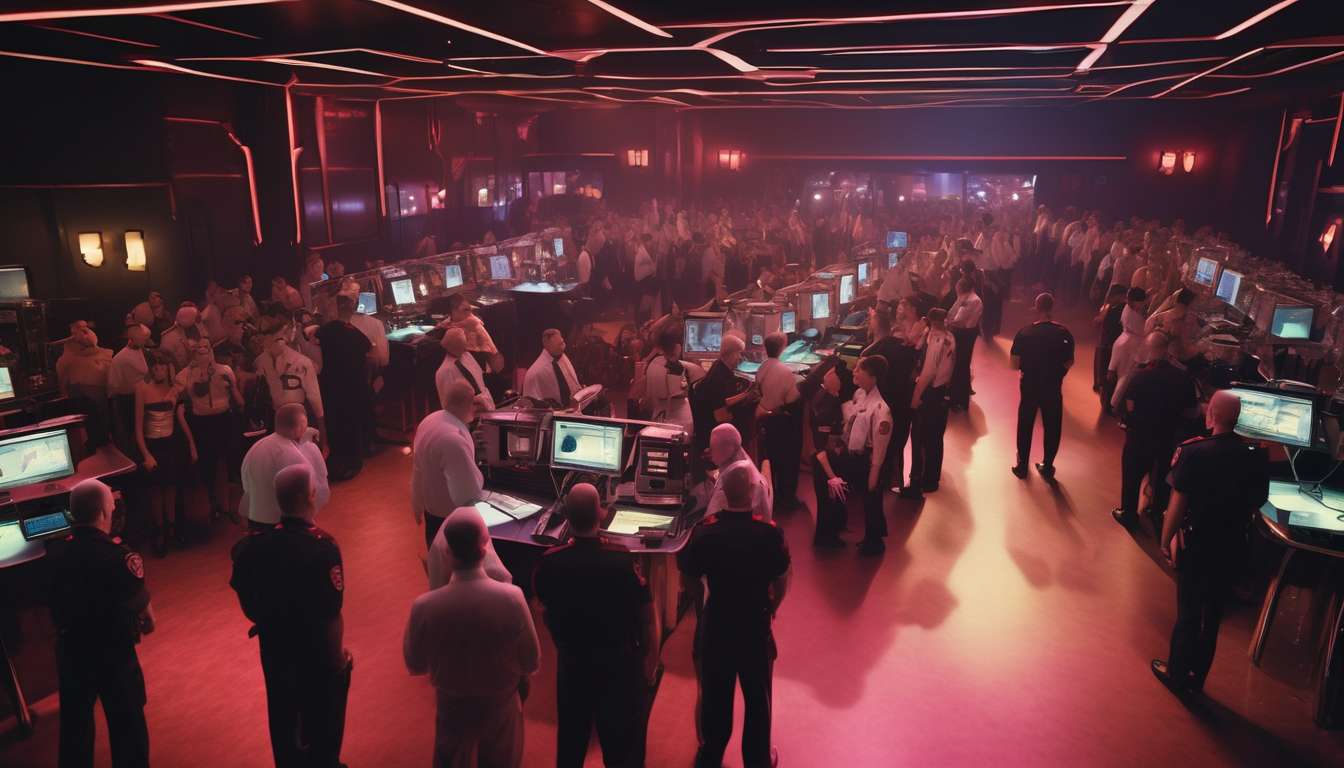
Creating safety plans for adult dance venues and live events may seem worlds apart from urban disaster preparedness, yet the parallels are striking and instructive.
We draw on emergency management principles—risk assessment, layered defenses, clear communication, and rehearsed response—to build environments where patrons, performers, and staff can enjoy themselves without fear.
By translating crowd-control models, incident-command structures, and evacuation mapping into the nightlife and performance context, we craft strategies tailored to the unique challenges of dim lighting, intoxication, and rapid shifts in crowd behavior.
We recognize that legal compliance, privacy, and respect for adult entertainment norms must be balanced with robust measures like trained security teams, discreet surveillance, and medical readiness.
In this article we share practical frameworks and checklists that merge public-safety rigor with venue-specific sensitivity, so operators and planners can proactively reduce risk while preserving atmosphere and dignity.
Risk Assessment
Identify and prioritize threats, vulnerabilities, and impacts unique to adult dance venues and live events.
- Map likely scenarios: overcrowding, hostile incidents, medical emergencies, property damage.
- Weigh each scenario by probability and severity.
Engage staff, performers, and regular patrons in threat workshops.
- Ensure participation so everyone feels included and accountable.
- Use workshops to gather local knowledge and buy-in for mitigations.
Assess existing measures and performance under stress.
- Review crowd control plans, emergency response protocols, and surveillance systems for gaps.
- Test realistic performance through drills or tabletop exercises.
Refine the risk matrix using incident histories and local intelligence.
- Use past incidents and local context to adjust probabilities and impacts.
- Assign clear ownership for mitigations and set timelines.
Consider softer risks: reputational harm and psychological safety.
- Account for how incidents affect community trust and staff/patron well‑being.
- Prioritize measures that preserve dignity and minimize trauma.
Prioritize interventions that reduce harm quickly while sustaining community trust.
- Balance cost and impact when selecting mitigations.
- Choose actions that are both effective and acceptable to the community.
Document decisions and commit to iterative improvement.
- Record risk assessments, chosen mitigations, owners, and review schedules.
- Regularly review and update plans so the venue remains welcoming, resilient, and prepared.
Physical Controls
Durable, well‑maintained physical controls
We layer barriers, lighting, access points, and medical stations to reduce risks and support safe operations without turning the venue into a fortress.
Clear, welcoming entry and exit points
We design entry and exit routes that feel welcoming yet secure, using reinforced doors, badge or wristband access where appropriate, and visible signage to guide guests.
Strategic lighting
We keep shared spaces warm and inviting while eliminating blind spots, balancing ambiance with safety.
Thoughtful surveillance integration
We position cameras to monitor high‑traffic zones and support incident review without intruding on personal moments.
Readily available medical care
We ensure medical stations are staffed, stocked, and prominently located to reassure everyone that care is available immediately.
Coordination with emergency responders
We coordinate fixtures and protocols with local emergency response teams so response times and procedures are predictable.
Routine maintenance and staff familiarity
Physical controls are maintained on a routine schedule, and staff know how each element ties into broader plans.
Inclusive design that fosters community
By combining practical infrastructure with inclusive design, we create a space where people feel both protected and part of the community.
Crowd Management
We plan movement flows and staffing so people can enter, exit, and enjoy the event safely and without bottlenecks.
- We map arrival routes, queue areas, and dance-floor capacities to keep groups together and reduce stress.
- By designing visible wayfinding and comfortable holding zones, we signal that everyone belongs and can move with dignity.
We coordinate crowd control measures that prioritize de-escalation and fairness.
- We use barriers and open sightlines only where they help prevent dangerous compression.
- We integrate surveillance systems discreetly to monitor density and spot developing risks while respecting privacy and community norms.
- Our protocols link real-time observation to clear decision points so we act before situations escalate.
We align crowd movement plans with emergency response routes and assembly points and rehearse scenarios with partners and venue operators.
- That preparation ensures we redirect flows smoothly during incidents.
- We keep communication calm and inclusive and restore normalcy quickly so the community feels safe, respected, and supported throughout the event.
Staff Training
We train staff in clear, consistent procedures.
Topics covered: de-escalation, accessibility-aware assistance, incident reporting, and coordinated emergency roles.
Outcome: teams can act confidently and compassionately under pressure.
We run regular, scenario-based sessions.
Approach: blend practical skills with the venue’s values.
Outcome: every team member feels seen and supported.
We teach crowd control techniques that prioritize dignity and safety.
Practice includes: rehearsing coordinated emergency response steps with defined roles and communication protocols.
We include hands-on instruction for surveillance use and monitoring.
Focus areas: responsible operation, privacy protection, and evidence integrity—while reinforcing situational awareness.
We make learning participatory.
Methods: role-plays, peer feedback, and repeat drills.
Outcome: builds muscle memory and trust.
We document competencies and refresh training after incidents or layout changes.
Outcome: knowledge stays current and relevant.
We emphasize inclusive language, cultural sensitivity, and accessible assistance.
Outcome: patrons and staff feel they belong and are protected.
We evaluate performance and iterate training.
Methods: clear metrics and after-action reviews.
Outcome: close gaps and strengthen collective confidence in protecting our community.
Medical Preparedness
We prepare for medical incidents by equipping staff, stocking key supplies, and coordinating with local EMS so we can respond quickly and effectively.
We train teams in basic and advanced first aid, AED use, and bleeding control so everyone feels capable and valued.
We assign clear roles for medical response and crowd control to keep injured guests safe while minimizing panic.
We keep well-marked, accessible medical stations and replenished trauma kits, oxygen, and cooling supplies tailored to venue needs.
We run joint drills with security, bar staff, and local emergency response units so our community practices together and builds trust.
We log incidents, review outcomes, and update protocols to reduce recurrence.
We ensure private spaces for sensitive medical care and communicate pathways so people know where to go.
We integrate information from surveillance systems to locate incidents faster while respecting privacy and prioritizing compassionate care.
By planning transparently and inclusively, we create a safer, more connected environment for staff and patrons alike.
Surveillance Strategy
Layered monitoring for early detection and privacy balance
We use layered monitoring—fixed cameras, mobile patrols, and discreet staff observation—to detect safety risks early while balancing privacy and patron comfort.
Coordinated sightlines and placement
We coordinate surveillance systems with clear sightlines to high-traffic areas, entry points, and stages so we can spot overcrowding, altercations, or medical incidents before they escalate.
Team training and shared responsibility
Our team trains together on recognizing behavior patterns and communicating via radios and headsets, creating a shared responsibility that helps everyone feel included and safe.
Real-time integration with crowd control
We integrate surveillance data into crowd control plans, using real-time feeds to:
- guide flow,
- open or close access points, and
- deploy staff where needed.
Incident protocols and unified response
During incidents, our protocol links observers with security leads and emergency response teams so decisions are timely and unified.
After-action review and community feedback
We review footage after events for debriefs and continuous improvement, inviting staff and regular patrons to give input.
Outcome
This collaborative approach to surveillance systems builds trust, strengthens response capabilities, and reinforces that safety is a community effort.
Legal & Privacy
We’ll ensure our security practices comply with applicable laws and respect patron privacy by defining clear policies on data collection, retention, access, and disclosure.
We’ll outline what data we collect, why we collect it, how long we keep it, and who can access it, so every team member and patron feels included and informed.
Our policies will cover incident reports, ID checks, and footage from surveillance systems.
- Access will be limited to authorized personnel.
- We will specify lawful grounds for sharing data.
We’ll train staff to balance safety needs with privacy rights.
- Safety needs include crowd control and coordinated emergency response.
- Staff will be instructed to use the minimal data necessary to manage risks.
We’ll implement technical and organizational safeguards.
- Secure storage and encryption of sensitive data.
- Regular audits of data handling and access logs.
We’ll provide transparency and a channel for concerns.
- Publish a plain-language privacy notice.
- Provide a point of contact for questions or complaints.
When vendors or contractors handle sensitive information, we’ll require contractual safeguards.
By being transparent, consistent, and accountable, we’ll foster trust among patrons, performers, and staff while keeping our venue safe and welcoming.
Emergency Exercises
Regular, realistic emergency exercises will be run—from tabletop walkthroughs to full-scale drills—to test plans, train staff, and find gaps before real incidents occur.
Cross-functional team:
- We’ll assemble managers, security, performers, and volunteers so everyone knows roles and feels part of the solution.
Scenarios to simulate:
- We’ll simulate crowd control scenarios, evacuation routes, medical incidents, and shelter-in-place events.
- During simulations we’ll measure response times and communication clarity.
Surveillance integration:
- We’ll integrate camera systems into drills to validate coverage, operator procedures, and information flow to incident commanders.
Communications practice:
- We’ll practice PA announcements, radios, and digital alerts so messages remain concise and consistent under stress.
After-action process:
- After each exercise we’ll debrief openly, document lessons learned, and update protocols.
- We’ll invite staff feedback to strengthen buy-in and trust.
Recurring cadence:
- We’ll schedule recurring exercises at varied times and scales to reflect real-life rhythms.
- This ensures the team stays confident, coordinated, and committed to keeping patrons and staff safe.
What specific insurance policies should venue owners carry to cover incidents unique to adult dance venues and live events (e.g., performer liability, indecency claims, alcohol-related incidents)?
Which insurance protects venues from performer incidents, indecency claims, and alcohol-related losses
Primary coverages to carry
- General Liability — protects against bodily injury and property damage claims arising at the venue.
- Liquor Liability — covers alcohol-related losses and third-party injury or property damage caused by intoxicated patrons.
- Professional Liability (Performer/Artist Liability) — addresses claims of negligence or errors in the performance or services provided by contracted talent.
Additional important protections
- Sexual Misconduct/Abuse Coverage — specifically covers allegations of sexual misconduct, abuse, or related indecency claims involving performers or staff.
- Employment Practices Liability (EPL) — covers claims by employees for discrimination, harassment, wrongful termination, and related workplace torts.
Other policies to consider as needed
- Property Insurance — to protect the venue’s physical assets and equipment.
- Business Interruption — to cover lost income if the venue must close temporarily after a covered loss.
- Cyber Liability — to cover data breaches, ransomware, and other cyber incidents affecting operations or patron data.
Policy features and risk-transfer options
- Endorsements for indecency or content-related claims — consider adding specific endorsements if standard policies exclude or limit coverage for indecent or obscene content, performer-created material, or content disputes.
- Additional Insured status — require contracted performers, production companies, and vendors to add the venue as an additional insured to their policies to shift liability and provide broader protection.
Implementation notes
- Work with a broker experienced in entertainment/venue risks to tailor limits and exclusions.
- Review contract language to ensure insurance requirements (limits, additional insureds, waivers) are enforceable.
- Consider higher limits or specialized coverage for high-risk events, touring acts, or alcohol-saturated functions.
How should venues handle the background checks and vetting of external contractors (DJs, performers, security firms) while respecting privacy and potential nondiscrimination laws?
Overview: How we vet external contractors while respecting privacy and nondiscrimination
We create clear, role-focused criteria tied to safety and performance.
- Criteria are defined for each role and limited to competencies, safety requirements, and business needs.
- Role-relevant questions and benchmarks are used to evaluate candidates consistently.
We obtain written consent before conducting checks.
- Contractors are informed which checks will occur and why.
- Written consent is documented and retained in accordance with privacy rules.
We limit background checks to job-relevant information.
- Only information directly related to the role’s safety and performance is requested or considered.
- Irrelevant personal data (e.g., unrelated criminal history beyond the role’s needs) is excluded.
We use consistent screening processes to avoid bias.
- The same screening steps and criteria are applied to all candidates for a given role.
- Structured evaluation tools (scoring rubrics, standardized interview questions) are used to promote fairness.
We store results securely and limit access.
- Background-check results and related records are kept in secure systems with role-based access controls.
- Retention and deletion follow data-minimization and privacy policies.
We provide appeal or review options.
- Contractors can request explanations of adverse decisions and submit additional information for review.
- A documented, impartial review process is available for disputes.
We train staff on bias-free hiring and documentation.
- Hiring staff receive training on nondiscrimination, implicit-bias awareness, and consistent application of criteria.
- Decisions and the basis for them are documented to demonstrate compliance and fairness.
We consult legal counsel to stay compliant and inclusive.
- Policies and practices are regularly reviewed with legal and HR experts to align with applicable employment, privacy, and anti-discrimination laws.
- Updates are implemented as laws and best practices evolve.
What are best practices for managing intoxicated patrons when local laws restrict security staff from using force or detaining individuals?
We are managing intoxicated patrons in settings where force or detainment is legally prohibited.
Prioritize de-escalation and calm verbal guidance.
- Train staff in noncoercive de-escalation techniques (verbal de-escalation, active listening, empathy).
- Use a calm tone, clear simple language, and give patrons space to reduce agitation.
Use clear signage and visible policies.
- Post brief, accessible guidance about expected behavior and available help (e.g., “If you need assistance, ask staff”).
- Make signage inclusive and language-accessible where possible.
Provide immediate noncoercive supports.
- Offer water, simple snacks, and a quiet rest area to reduce acute intoxication effects.
- Assign a trained staff member to monitor the person at a comfortable distance and check for medical needs.
- Offer safe transport options such as ride-share vouchers, taxis, or calling a sober companion; document refusals.
Coordinate with medical professionals when needed.
- Establish clear thresholds for when medical evaluation is required (loss of consciousness, vomiting repeatedly, respiratory distress, seizure, inability to stay awake, suspicion of overdose).
- If medical help is needed, call emergency medical services and provide concise incident details.
Involve law enforcement only when safety is threatened.
- Engage police as a last resort for threats to safety or when other measures have failed.
- Provide officers with factual, nonjudgmental incident documentation.
Document incidents thoroughly.
- Record time, staff present, behaviors observed, actions offered, transport arrangements, medical referrals, and patron responses.
- Keep documentation factual, objective, and stored per privacy policies.
Review policies and support staff after incidents.
- Conduct post-incident debriefs to evaluate what worked, what didn’t, and update protocols as needed.
- Offer staff access to mental-health support and counseling after stressful encounters.
Provide inclusive, non-stigmatizing care.
- Ensure responses respect dignity, cultural differences, and housing/status diversity.
- Avoid moralizing language; focus on safety, consent, and harm reduction.
Conclusion
You’ve covered the essentials for keeping adult dance venues and live events safe and professional.
Use clear risk assessments to identify hazards and prioritize controls.
Layered physical controls (barriers, lighting, signage) reduce opportunities for incidents.
Proactive crowd management keeps flows orderly and prevents bottlenecks.
Trained staff (security, stewarding, front-of-house) ensure consistent, professional responses.
Medical readiness (first aiders, accessible kits, clear access for EMS) shortens response times.
Focused surveillance (CCTV, observation points) supports incident detection and evidence collection.
Attend to legal and privacy issues by following consent, data protection, and reporting requirements.
Regular emergency exercises and continuous review keep plans sharp and adaptable.
Stay vigilant, communicate expectations, and adapt as your venue or events evolve to maintain a secure, welcoming atmosphere.