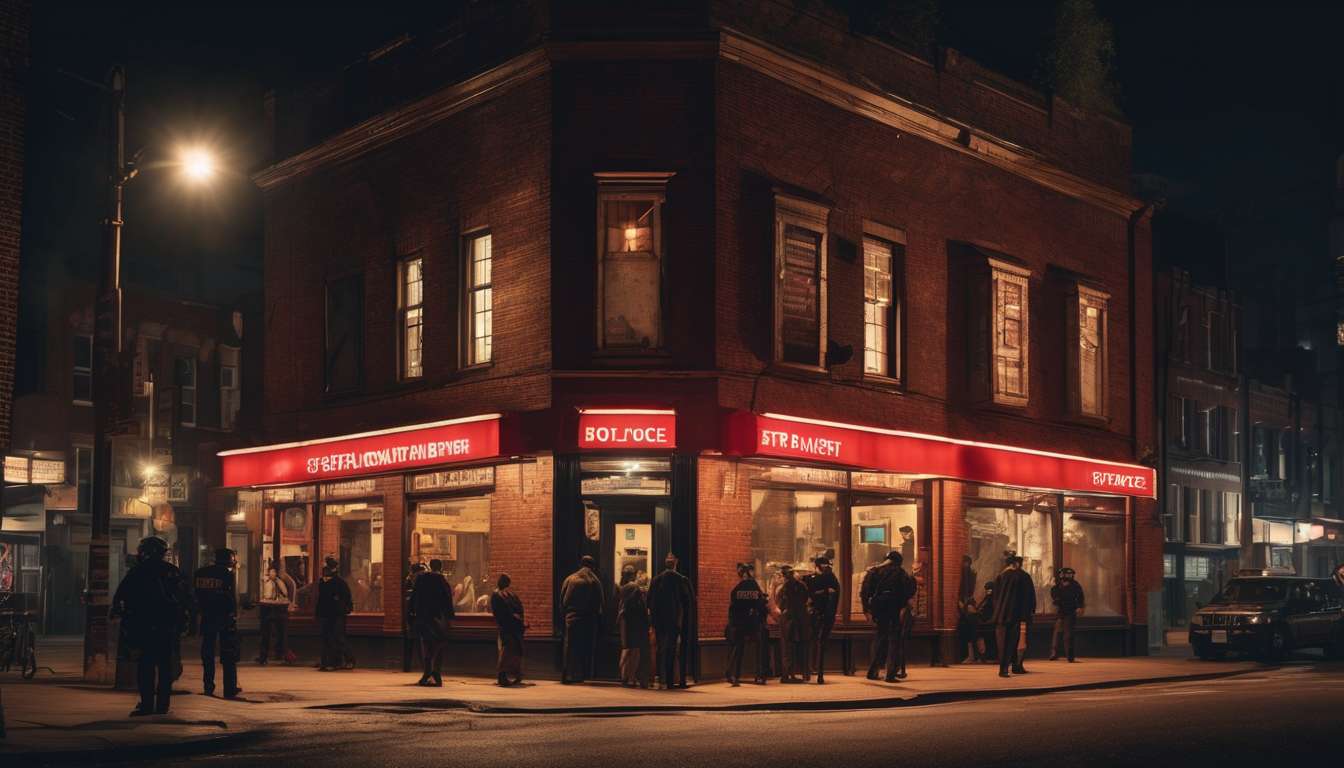
Most conversations about nightlife recently pivot toward debates over regulation, labor rights, and mainstream streaming platforms amplifying formerly fringe performances.
We watch as cities revise zoning laws, performers organize for better protections, and viral clips reshape audience expectations overnight.
We trace how policy and technology intersect with artistry:
- Surveillance cameras alter performers’ privacy and venues’ liability.
- Cashless payment systems change tipping practices and financial autonomy.
- The gig economy fragments job security and redefines contractual norms.
We consider how cultural movements have reframed exotic dancing from clandestine entertainment to a contested public practice:
- Feminist waves influence discourse on agency versus exploitation.
- LGBTQ+ advocacy reshapes spaces of inclusivity and performance styles.
- Shifting attitudes toward bodily autonomy challenge legal and social boundaries.
We map a lineage of stages, clubs, and theaters where social norms were negotiated through choreography and costume.
We interrogate the coexistence of commodification and empowerment, asking whether visibility equals validation.
As scholars, critics, and community members, we undertake a historical and cultural excavation to reveal how contemporary trends both continue and rupture long-standing traditions of performance, labor, and desire.
Origins of Stagecraft
We trace the origins of stagecraft to ancient ritual performances, where movement, costume, and makeshift staging first shaped how bodies were presented and perceived.
Communal beginnings mattered: communities made space for embodiment, and that collective making shaped early staging practices. These shared practices connected to later forms without losing the sense of shared practice.
Early staging set enduring patterns: choices about staging and visibility—how rituals assigned roles, modulated sightlines, and created economies of attention—later morphed into paid performance and inform contemporary debates over exotic dance economy and performance labor politics.
Origins are living templates, not isolated relics: people adapted, resisted, and reshaped those templates together rather than merely inheriting fixed forms.
Continuities enable presence and inclusion: performers claim presence and audiences feel included because visibility was socially and economically negotiated.
By grounding the narrative in communal agency, we invite readers to see themselves in a lineage of staged expression shaped by:
- Craft — material and embodied techniques passed through practice.
- Care — mutual maintenance of performers and audiences.
- Contestation — negotiation and resistance that transformed forms over time.
Early Club Economies
In early clubs we built informal economies around tips, private dances, and negotiated access that turned staged movement into everyday livelihoods.
We organized an exotic dance economy that depended on trust, mutual aid, and clear norms:
- Who covered shifts.
- How we shared information about patrons.
- When to step in for one another.
We saw staging and visibility as both workplace strategy and collective self-definition, using light, timing, and placement to maximize earnings while protecting peers from unwanted attention.
We navigated performance-labor politics daily, pushing back against management practices that tried to individualize risk or pit us against each other.
We traded lessons on negotiation, pooled tips in crises, and coordinated schedules so everyone could care for family and health.
Belonging meant keeping each other safe, advocating for fair rules, and remembering that the club’s informal systems were political acts that sustained our community and turned performance into a viable, shared livelihood.
Choreography and Costume
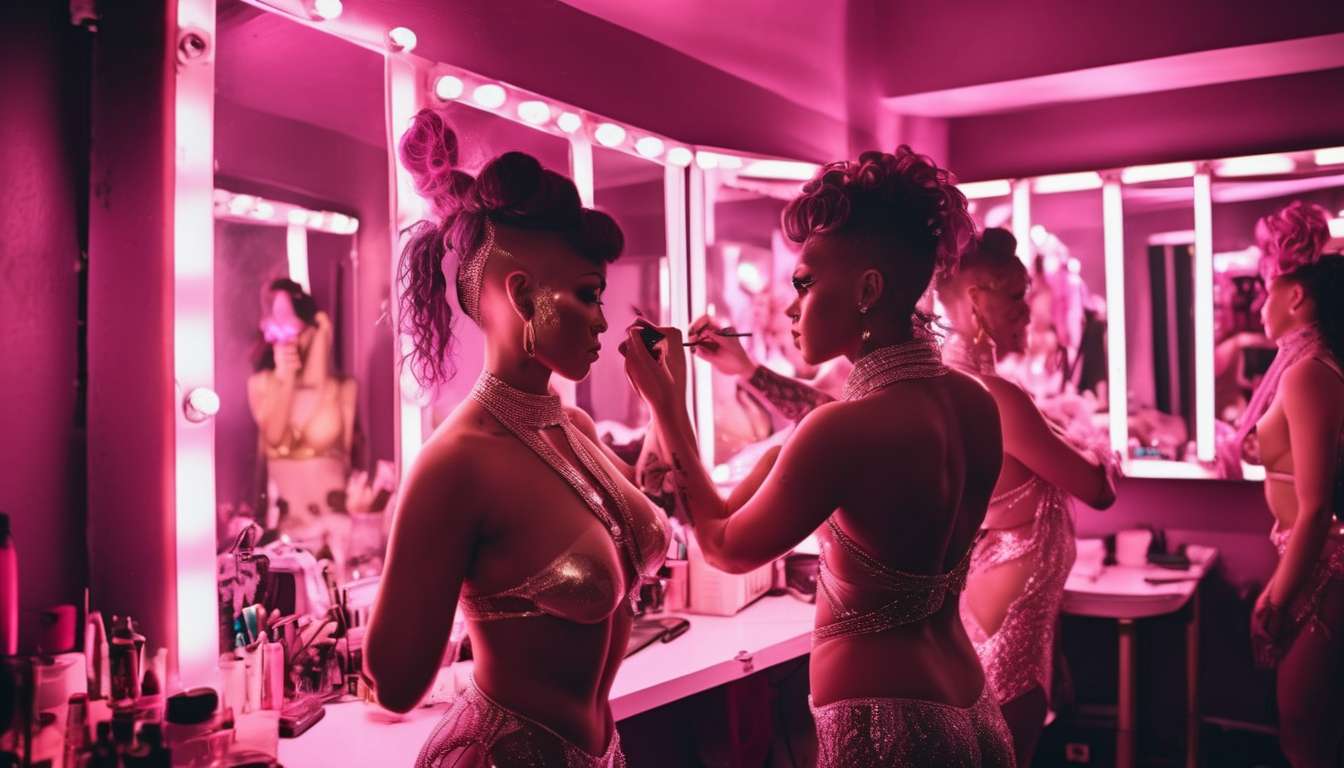
In our clubs we developed choreography and costume as practical tools.
We created rigorous moves, signals, and adaptable outfits that helped us control attention, set boundaries, and maximize earnings.
Choreography balanced individual flair with collective standards.
- We crafted routines so everyone knew when to escalate energy or give space.
- Choreography functioned as a shared language and frontline tactic to claim time and value onstage.
- Movement codes were used to signal support or call for boundaries.
Costumes were modular and situational.
- Pieces could be removed or swapped to match a shift’s mood, clientele, or venue rules.
- Modular costumes reinforced cohesion while allowing personal expression of identity.
We tuned staging, lighting, and visibility to manage safety and revenue.
- Reading lighting and crowd patterns allowed us to protect colleagues and enhance tips.
- Staging choices were used strategically to increase visibility when needed or pull back to preserve safety.
We discussed performance labor politics openly and organized practices to sustain the group.
- Who got prime sets and how profits were divided were talked through plainly.
- Decisions were made about when to push for fairness.
- Together we built practices that sustained belonging, safety, and dignity while making clear the work’s artistry and economic realities.
Legal and Regulatory Shifts
Over the past decades we’ve navigated a patchwork of laws and ordinances that repeatedly reshaped where, how, and under what conditions we could work.
We tracked city zoning changes, nudity ordinances, and licensing rules that directly altered the contours of the exotic dance economy.
Those legal shifts forced changes in venues, schedules, and the kinds of services offered.
When enforcement tightened, stages moved farther from downtown cores; when enforcement relaxed, clubs multiplied and staging and visibility changed overnight.
We organized informally and formally to share knowledge about compliance, safety protocols, and best practices so we could protect one another and maintain income streams.
Our responses were strategic and practical:
- Adapting floorplans to meet new regulations and to improve safety and visibility.
- Renegotiating contracts with venues and managers to secure more stable terms.
- Documenting incidents to establish patterns of enforcement or abuse.
- Influencing local hearings and participating in civic processes to contest arbitrary restrictions.
Those adaptations reflected not only business survival but also an ongoing negotiation of performance labor politics — how power, visibility, and regulation intersect in our work.
By staying connected, we kept each other informed, resisted isolation, and shaped more predictable, safer conditions for all of us.
Feminist and Labor Debates
Many of us have debated whether our work empowers or exploits us, and those conversations have shaped both feminist theory and labor organizing within the industry.
We examine how the exotic dance economy intersects with feminist goals:
- Some argue for autonomy and income justice.
- Others highlight coercion and structural inequality.
Together we map performance labor politics that center worker-led advocacy, seeking fair wages, safety protocols, and collective bargaining while challenging stigma that limits rights.
We build belonging by honoring varied experiences—dancers, managers, allies—and by insisting policy reflect lived realities rather than moralizing assumptions.
In practice, staging and visibility matter:
- Who controls the stage?
- Who decides visibility norms?
- How do those decisions affect power and access?
We push for frameworks that treat exotic dancing as legitimate labor, grounded in harm reduction, consent, and economic dignity.
By combining feminist analysis with pragmatic organizing, we create pathways for safer, more equitable workplaces where diverse voices shape futures.
Queer Performance Spaces
In queer performance spaces we center gender-expansive expression, mutual care, and experimental forms that reshape who gets to be seen and how.
We build stages where vulnerability and play coexist, challenging norms of the exotic dance economy by prioritizing consent, shared decision-making, and equitable pay structures.
Our shows make room for artists who’ve been excluded from mainstream circuits, foregrounding the intersections of identity and performance labor politics that shape access and safety.
We practice collaborative booking, tip-pooling alternatives, and mentorship that redistribute power and resources, so labor is valued beyond spectacle.
- Collaborative booking practices increase representation and reduce gatekeeping.
- Tip-pooling alternatives and equitable pay structures ensure financial stability for performers.
- Mentorship redistributes knowledge and amplifies artists who have been marginalized.
Staging and visibility become tools of solidarity: deliberate lighting, choreography, and program notes that honor performers’ pronouns, boundaries, and narratives.
We also use community agreements and aftercare to sustain bodies and creativity.
- Community agreements set shared expectations for consent, behavior, and accountability.
- Aftercare (on-site and off-site) supports emotional and physical wellbeing after performances.
By refusing singular notions of desirability, we expand audiences’ understanding of erotic expression and cultivate belonging.
These spaces model how policy, venue practices, and collective action can transform an industry historically organized against many of us into one that includes and uplifts us.
Technology and Visibility
Technology has widened who can perform and how we’re seen.
Platforms, algorithms, and digital labor norms now shape visibility and value, so performers navigate new systems that affect who gets attention and income.
Parts of the exotic dance economy have moved online.
- This expansion creates new opportunities for connection and income.
- It also introduces new gatekeepers—platform policies, moderation, and algorithmic sorting—that can limit access or payment.
Performers negotiate both in-person and digital elements together.
- Camera framing, platform rules, tipping cultures, and analytics sit alongside lighting, choreography, and stage presence.
- Questions arise about who gets promoted and why, shifting the work of staging into thumbnails, hashtags, and metadata strategies.
Performance labor politics are struggling to keep up.
- Labor rights, payment protections, and moderation policies often lag behind evolving practices.
- This gap creates precarity and unclear recourse for performers.
Communities respond by building support systems and advocacy.
- Mutual aid networks form to cover gaps in income and safety.
- Practitioners share tactics to reduce algorithmic harm and safer-platform practices.
- Many push for policies that recognize digital performance work as legitimate labor.
Together, these efforts create belonging across dispersed spaces—clubs, livestreams, and social feeds.
Visibility becomes more than exposure: it can be community-supported value and safety for those who perform.
Contemporary Cultural Tensions
Many communities are wrestling with conflicting views about exotic dance — between claims of empowerment and critiques of exploitation — that shape policy, public opinion, and performers’ daily choices.
We negotiate contemporary cultural tensions by listening to one another: dancers, organizers, patrons, and neighbors.
We acknowledge the thriving exotic dance economy while also interrogating who benefits and who bears risk.
We talk plainly about performance labor politics — wages, safety, and agency — because belonging depends on fair treatment and mutual respect.
We insist that staging and visibility matter:
- Visibility can affirm identity and open markets.
- Visibility can also invite surveillance, stigma, or regulation that pushes work underground.
We build coalitions that center performers’ voices in policy debates, aiming for protections that preserve autonomy and community.
We resist polarizing rhetoric that erases nuance, and we craft local solutions that reflect shared values, including:
- Workplace standards.
- Public education.
- Performer-centered policy development.
In doing so, we create spaces where people who participate in or care about exotic dance can feel seen, heard, and supported.
How have audience demographics (age, race, socioeconomic status) changed over time and influenced what gets performed?
We’re asking how changing audience demographics — age, race, class — have shifted what gets performed.
Younger crowds push trendier, cross‑genre acts, encouraging experimentation and blending of styles.
More diverse patrons demand representation and varied aesthetics, prompting programming that reflects multiple cultural perspectives.
Wealthier audiences often expect luxury, spectacle, and nostalgia, influencing production values, marketing, and repertoire choices.
We’ve adapted shows to reflect patrons’ identities and spending power by blending tradition with innovation so everyone feels seen, welcomed, and excited to return for performances that mirror their communities.
What role have non-performance workers (bartenders, DJs, security, house moms) played in shaping club cultures and performers’ careers?
We see non-performance workers as the backbone of club culture; they’re the connectors who set tone, safety, and rhythm.
We rely on:
- Bartenders to build rapport.
- DJs to shape pacing and mood.
- Security to protect the space.
- House moms to mentor performers.
We know their choices influence who gets spotlighted, what styles thrive, and how careers develop.
We value their guidance, trust, and daily support in creating belonging and opportunity.
How have health and safety practices specific to dancers (injury prevention, substance use support, sexual health services) evolved independently of legal or labor debates?
We’ve seen dancer-specific health and safety practices grow from peer-led tips to organized support.
Key developments include:
- Shared injury-prevention routines, accessible trainers, and ergonomics workshops.
- On-site harm-reduction supplies, sober spaces, and referral networks for substance support.
- Confidential sexual-health clinics, testing events, and consent training.
We’ve built trusting networks and mutual aid, creating welcoming care that centers performers’ needs independently of legal or labor debates.
We continue expanding those resources together.
Conclusion
You’ve traced exotic dancing from its stagecraft roots through club economies, choreography, costume, law, feminist and labor debates, queer spaces, and digital visibility.
You’re left with a complex picture: it’s artistry and labor, empowerment and exploitation, community and commodification.
Moving forward, you’ll need policies that protect workers, scholarly attention that honors performance, and cultural conversations that resist easy moralizing.
Only by holding these tensions can the form evolve with dignity, safety, and creative freedom.